
South Indian Dishes to Avoid for Diabetics
South Indian cuisine is a treasure trove of aromatic spices, vibrant colors, and comforting textures that have captivated food lovers worldwide. From steaming idlis to crispy dosas, the region's dishes are synonymous with hospitality and celebration. However, for the millions managing diabetes, the very elements that make these meals irresistible—rice-heavy bases, deep-fried snacks, and syrupy sweets—can pose significant challenges. In this comprehensive guide to South Indian dishes to avoid for diabetics, we'll explore why certain staples can spike blood sugar levels, backed by nutritional insights and practical advice. Whether you're a lifelong fan of Tamil Nadu's sambar or Kerala's payasam, understanding these pitfalls is key to enjoying your heritage without compromising health.
Diabetes affects over 77 million adults in India, with South Indians facing a higher prevalence due to genetic factors and dietary patterns rich in refined carbs. High-glycemic-index (GI) foods, common in traditional South Indian dishes, to be avoided by diabetics because, cause rapid blood sugar surges, leading to fatigue, weight gain, and long-term complications like neuropathy or cardiovascular issues. But fear not—this isn't about deprivation. By identifying South Indian dishes to avoid for diabetics and swapping them for low-GI alternatives, you can savor the essence of the South while keeping your A1C in check. Let's dive deeper into the why and how.
The Science Behind South Indian Dishes to Avoid for Diabetics
At the heart of diabetes management lies the glycemic index, a scale measuring how quickly foods raise blood glucose. Foods scoring above 70 are high-GI, promoting insulin resistance, while those under 55 are safer bets. South Indian cooking often relies on white rice (GI 73), urad dal batters, and jaggery-sweetened desserts, pushing many dishes into the danger zone.
Consider the cultural context: Meals like a full thali with unlimited rice or festival feasts laden with ghee and sugar are norms. Yet, studies show that South Asians metabolize carbs faster, amplifying risks. Fried items add trans fats and empty calories, exacerbating insulin sensitivity issues. A single serving of a popular fried snack can pack 300-500 calories, mostly from carbs and fats, equivalent to half a day's carb allowance for many diabetics.
Portion control is crucial, but some South Indian dishes to avoid for diabetics are inherently problematic due to their composition. For instance, fermentation in idlis lowers GI slightly (to around 65), but frying or sweet add-ons negate benefits. Transitioning requires mindfulness: Opt for millets over rice, bake instead of fry, and use stevia over sugar. This guide spotlights 12 must-avoid dishes, their nutritional breakdowns, and swaps to keep your plate balanced.
Medu Vada Medu Vada: A crispy favorite that's deceptively carb-heavy.
Top 12 South Indian Dishes to Avoid for Diabetics
1. Medu Vada: The Fried Doughnut of Doom
[caption id="attachment_1667" align="aligncenter" width="1024"]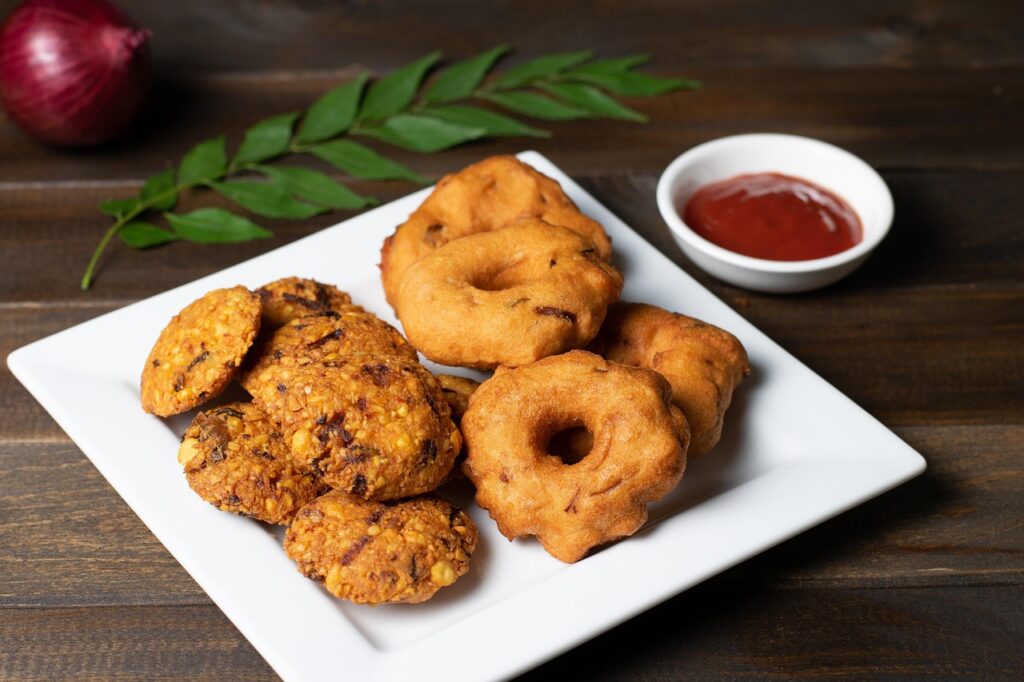 South Indian Dishes to Avoid for Diabetics[/caption]
Medu vada, a Tamil Nadu staple, is urad dal batter shaped into rings and deep-fried to golden perfection. Served with sambar and chutney, it's a breakfast icon. But for diabetics, it's a no-go: One piece (50g) delivers 200 calories, 25g carbs, and a GI of 70-80 due to the lentil-rice mix and oil absorption. The frying process adds 15g of fat, straining the pancreas.
Why Avoid? Rapid carb breakdown leads to post-meal spikes; studies link frequent fried vadas to a 20% higher diabetes risk. In the realm of South Indian dishes to avoid for diabetics, medu vada tops the list for its deceptive "healthy dal" facade.
Alternative: Steam the batter into plain urad dal idlis (GI 60) with vegetable sambar. Add fiber with a side of cucumber raita.
2. Sambar Vada: Soaked in Carb Chaos
[caption id="attachment_1665" align="aligncenter" width="1024"]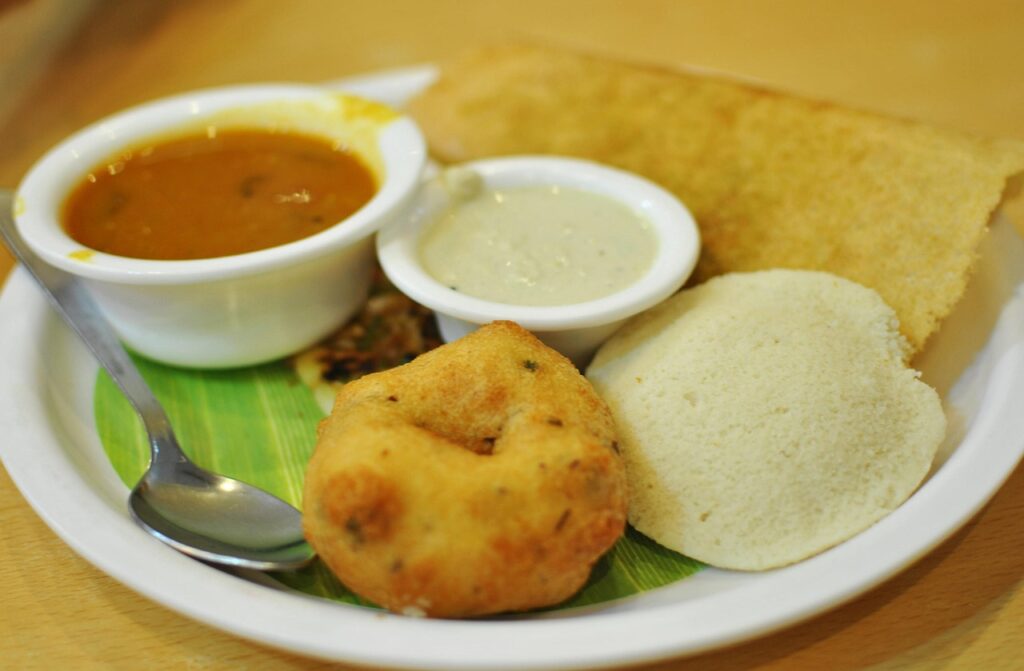 South Indian Dishes to Avoid for Diabetics[/caption]
Dunking hot medu vadas into tangy sambar sounds divine, but this combo amplifies issues. The sambar's toor dal and veggies are fine, but the soaked vada absorbs extra carbs (total 40g per serving) and sodium, bloating, and spiking glucose.
Why Avoid? The dish's GI hovers at 75, per regional meal analyses, making it a prime entry in South Indian dishes to avoid for diabetics. Excess tamarind and spices can irritate the digestive system, too.
Alternative: Opt for sambar with steamed moong dal vadas—lower fat and GI under 55.
Sambar Vada: Flavorful, but a blood sugar saboteur.
3. Murukku: Crunchy Calorie Trap
This spiral-shaped rice flour snack from Tamil Nadu and Andhra Pradesh is festival fodder, fried in ghee or oil. A 30g serving packs 150 calories, 20g carbs, and negligible fiber—GI 85.
Why Avoid? Refined flours and deep-frying make it a fat-carb bomb, contributing to weight gain in diabetics. It's among the South Indian dishes to avoid for diabetics due to its mindless munching potential.
Alternative: Baked millet murukku using jowar flour, baked at 180°C for crispiness without oil.
4. Banana Chips: Sweet Fried Deception
Kerala's nendran banana slices, fried in coconut oil, are addictive. But 100g yields 500 calories, 60g carbs (mostly sugars), and saturated fats—GI 65-70.
Why Avoid? The natural sugars, plus frying, elevate triglycerides; a staple in South Indian dishes to avoid for diabetics during Onam feasts.
Alternative: Air-fried raw banana slices with chaat masala—under 100 calories per serving.
Banana Chips: Kerala's pride, diabetes's foe.
5. Payasam: Syrupy Sugar Surge
This milk-rice pudding, laced with jaggery or sugar, is a Kerala and Tamil dessert. One bowl (200ml) has 300 calories, 50g carbs—GI 80+.
Why Avoid? Condensed milk and vermicelli amplify sweetness; post-festive spikes are common in South Indian dishes to avoid for diabetics.
Alternative: Almond milk payasam with stevia and chia seeds for thickness.
6. Mysore Pak: Ghee-Laden Indulgence
Karnataka's gram flour, sugar, and ghee cake is melt-in-mouth heaven. A 50g piece: 250 calories, 30g carbs, high saturated fat—GI 75.
Why Avoid? The besan-sugar combo ferments poorly in blood; a classic in South Indian dishes to avoid for diabetics at weddings.
Alternative: Sugar-free besan barfi baked with erythritol.
Mysore Pak Mysore Pak: Rich, but risky for glucose control.
7. Plain White Rice Dosa: Staple Spike
Thin crepes from fermented rice-urad batter seem light, but two dosas (100g) offer 200 calories, 40g carbs—GI 70.
Why Avoid? White rice dominates; oversized portions in thalis make it a top South Indian dish to avoid for diabetics.
Alternative: Ragi or moong dal dosa (GI 50).
8. Appam with Coconut Milk Stew: Creamy Carb Load
Kerala's lacy pancakes with starchy rice batter, paired with coconut milk, hit 350 calories and 45g carbs per serving—GI 68.
Why Avoid? Coconut's fats plus carbs hinder weight management; frequent in South Indian dishes to avoid for diabetics.
Alternative: Wheat appam with vegetable curry.
9. Rava Kesari: Semolina Sweet Trap
This upma-like dessert from Andhra uses sooji, ghee, and sugar. 150g: 280 calories, 40g carbs—GI 85.
Why Avoid? Refined semolina digests fast; a sneaky entry in South Indian dishes to avoid for diabetics.
Alternative: Oats kesari with monk fruit.
10. Ladoo (Coconut or Besan): Ball of Burden
Fried or steamed balls of coconut, besan, and jaggery—200 calories, 25g carbs per piece, GI 70.
Why Avoid? Dense sugars; ubiquitous in festivals, marking it as a key South Indian dish to avoid for diabetics.
Alternative: Protein-packed quinoa ladoo.
11. Halwa (Carrot or Wheat): Dense Delight
Stewed fruits or grains in ghee-sugar—250 calories, 50g carbs, GI 75.
Why Avoid? High density causes prolonged elevation; another reason in South Indian dishes to avoid for diabetics.
Alternative: Steamed carrot halwa with dates.
12. Pakoras and Bhajis: Veggie in Vain
Onion or potato fritters in chickpea batter, deep-fried. 100g: 300 calories, 30g carbs—GI 80.
Why Avoid? Batter and oil override veggie benefits; evening snack peril in South Indian dishes to avoid for diabetics.
Alternative: Baked veggie tikkis.
Murukku Murukku: Spiraled into high-carb territory.
Healthier Twists on South Indian Favorites
Swapping isn't a sacrifice—it's a strategy. Embrace low-GI millets like foxtail (GI 50) for rice in bisibele bath. Use coconut yogurt for raita, and herbs for flavor. A sample day: Ragi dosa breakfast, millet sambar lunch, grilled fish curry dinner. Track with apps like MyFitnessPal for precision.
Success Stories: Real Wins from Ditching Risky Dishes
Ravi, a 52-year-old Chennai engineer, reversed prediabetes by axing South Indian dishes to avoid for diabetics like payasam and murukku. Switching to millet idlis, he dropped 12kg in six months, A1C from 6.5 to 5.4. "Festivals were tough, but almond payasam saved the day," he shares.
In Kerala, Lakshmi, 45, battled type 2 diabetes post-gestational. By avoiding banana chips and opting for air-popped sundal (chickpea salad), she normalized glucose without meds. Her HbA1C fell 2 points in 90 days, echoing plant-based shifts in Indian trials.
These tales, inspired by community programs like Fight Diabetes with Food India, prove: Small changes yield big results.
FAQs on South Indian Dishes to Avoid for Diabetics
Can I ever enjoy dosa if I'm diabetic?
Yes, but stick to small portions of ragi or multigrain versions. Avoid white rice dosas from our South Indian dishes to avoid the diabetic list.
Are all South Indian sweets off-limits?
Most, like payasam, yes—but try jaggery-free options in moderation.
How do I handle family feasts?
Pre-eat fiber-rich salads; politely decline high-GI items like mysore pak.
What's the GI of sambar alone?
Around 50—safe, but pair wisely to dodge South Indian dishes to avoid for diabetics.
Can spices help manage diabetes?
Yes, turmeric and fenugreek lower GI, but don't mask carb overload.
Is coconut oil okay for frying alternatives?
In limits—its MCTs aid metabolism, but bake when possible.
How often should I monitor blood sugar after meals?
Test 2 hours post-meal; aim under 140mg/dL.
Disclaimer
This guide on South Indian dishes to avoid for diabetics is for informational purposes only. Diabetes management is personal—consult your endocrinologist or dietitian before dietary changes. Individual responses vary based on meds, activity, and health history. xAI and this content assume no liability for outcomes.
References
- UnlockFood.ca: Eating Well with Diabetes – South Indian Diets
- Times of India: 5 Indian Foods Increasing Diabetes Risk
- UnlockFood.ca: Sweets in South Indian Diets
- Sugar.Fit: South Indian Diet for Diabetes
- UnlockFood.ca: Fried Foods and Diabetes
- Sugar.Fit: South Indian Diet Plan
- UnlockFood.ca: Carbohydrates in South Indian Cuisine
- Redcliffe Labs: GI Chart for Indian Foods
- Fitterfly: GI and GL Chart
- PMC: Low-GI South Indian Cuisine Study
- PMC: Glycemic Carbs in Breakfast Foods
- The South First: South Indian Breakfast GI
- Times of India: Weight Loss Story – Reversed Diabetes
- Diabetes Journals: Epidemiology in South Asians
- PCRM: Fight Diabetes with Food India Success
- Hopkins Diabetes Info: South Asian Diets and Diabetes




0 Comments