
Red Meat and Diabetes
In the world of nutrition, few topics spark as much debate as red meat and diabetes. Is that juicy steak on your plate a ticking time bomb for your blood sugar levels, or can it fit into a balanced diet without derailing your health? With diabetes affecting over 500 million people worldwide and numbers projected to rise, understanding the connection between red meat and diabetes has never been more critical. This article dives deep into the scientific truth, separating hype from hard evidence, to help you make informed choices about your plate.
The controversy around red meat and diabetes stems from decades of research showing mixed signals. Some studies scream "danger," linking higher red meat intake to elevated diabetes risk, while others suggest the relationship is nuanced or even negligible. As we unpack the data, we'll explore what red meat really is, how diabetes works, and the latest meta-analyses that cut through the noise. Whether you're managing prediabetes, living with type 2 diabetes, or just curious about preventive eating, this guide arms you with facts—not fear.
At its core, the discussion on red meat and diabetes isn't about villainizing a food group but about moderation, quality, and context. Processed meats like bacon and sausages often take the brunt of the blame, but unprocessed cuts aren't off the hook either. We'll examine risk ratios, hazard models, and even randomized trials to reveal the full picture. By the end, you'll see why experts like those from the World Health Organization and Harvard T.H. Chan School of Public Health urge caution, yet emphasize that lifestyle factors like exercise and overall diet play starring roles in red meat and diabetes dynamics.
Understanding Diabetes: The Basics Before the Meat
Before we grill the details on red meat and diabetes, let's set the stage with diabetes fundamentals. Diabetes is a chronic condition where the body struggles to regulate blood sugar (glucose), leading to high levels that damage organs over time. There are two main types: Type 1, an autoimmune disorder where the pancreas stops producing insulin, and Type 2, which accounts for 90-95% of cases and involves insulin resistance—the cells ignore insulin's signal to absorb glucose.
Type 2 diabetes, the focus of most red meat and diabetes research, is heavily influenced by diet, genetics, age, and inactivity. Risk factors include obesity, family history, and poor glycemic control. Symptoms range from fatigue and frequent urination to blurred vision and slow-healing wounds. Untreated, it raises the chances of heart disease, kidney failure, and neuropathy.
Epidemiologically, red meat and diabetes intersect here because diets high in saturated fats and heme iron—abundant in red meat—may exacerbate insulin resistance. But it's not just about meat; refined carbs and sedentary habits amplify risks. The American Diabetes Association (ADA) stresses balanced nutrition, recommending fiber-rich foods to stabilize blood sugar.
Globally, diabetes prevalence has quadrupled since 1980, per the International Diabetes Federation, with diet as a key driver. In the U.S., 38 million adults have diabetes, and 97 million more are prediabetic. This surge underscores why exploring red meat and diabetes matters: Small dietary tweaks could prevent millions of cases.
Insulin resistance starts subtly. When cells resist insulin, the pancreas pumps out more, eventually wearing out beta cells. Chronic high glucose (hyperglycemia) follows, measured by HbA1c levels above 6.5%. Managing red meat and diabetes involves monitoring these markers, but prevention is king. Studies show lifestyle interventions slash type 2 risk by 58%.
What Exactly is Red Meat? Defining the Debate
Red meat typically refers to unprocessed muscle from mammals like beef, pork, lamb, veal, and goat. It's "red" due to myoglobin, a protein that stores oxygen in muscles, giving it that characteristic hue. Nutritionally, red meat is a powerhouse: High in protein (20-25g per 3oz serving), bioavailable iron, zinc, B12, and selenium. A lean sirloin steak delivers 25g of protein with minimal carbs, making it appealing for low-carb diets like keto.
But red meat and diabetes discussions often blur lines between types. Unprocessed red meat is fresh cuts—think ground beef or roasts—while processed includes cured, smoked, or salted varieties like hot dogs, salami, and jerky. The latter packs sodium (up to 1,000mg per serving) and nitrates, preservatives linked to inflammation.
Portion sizes matter too. The USDA defines a serving as 3oz (deck-of-cards size), but Americans average 6oz daily, per NHANES data. Globally, consumption varies: High in the U.S. (100g/day) versus lower in Asia (20g/day). This disparity fuels the red meat and diabetes variance across studies.
Cooking methods alter risks. Grilling or charring produces advanced glycation end-products (AGEs), which may worsen insulin sensitivity. Boiling or stewing minimizes this. Lean cuts (sirloin, tenderloin) have less saturated fat than ribeye, potentially easing red meat and diabetes concerns.
Sustainability aside, red meat's nutrient density supports muscle health, but overreliance can crowd out veggies and whole grains—key for diabetes prevention. Balancing red meat and diabetes means viewing meat as a side, not the star.
The Science Behind Red Meat and Diabetes: What the Studies Reveal
Now, the meat of the matter: Does red meat cause diabetes? The scientific consensus leans yes—for higher intakes—but with caveats. Let's dissect the evidence.
A landmark 2024 federated meta-analysis in The Lancet Diabetes & Endocrinology, pooling data from 1.97 million adults across 31 cohorts in 20 countries, found clear links. Over 10 years, 107,271 incident type 2 diabetes cases emerged. Key findings: Each 100g/day of unprocessed red meat raised risk by 10% (HR 1.10, 95% CI 1.06-1.15). Processed meat (50g/day, ~2 slices bacon) upped it 15% (HR 1.15, 1.11-1.20). Even poultry showed an 8% hike (HR 1.08, 1.02-1.14), though weaker.
This builds on earlier work. A 2023 EPIC-InterAct study in the American Journal of Clinical Nutrition tracked 200,000 Europeans, linking total red meat to linear T2D risk increases. Harvard's Nurses' Health Study (1980-2018) echoed: Two weekly red meat servings correlated with 62% higher diabetes odds versus one monthly.
Meta-analyses amplify this. A 2023 European Heart Journal review of 20 studies (800,000+ participants) confirmed unprocessed red meat's tie to diabetes (RR 1.19 per 100g/day). Processed? Worse, at RR 1.27 per 50g.
Yet, not all data damns red meat. A 2022 Nature Medicine Burden of Proof study rated evidence "weak" for unprocessed red meat and T2D (RR 1.14 at 50g/day, 95% UI 0.97-1.32). Randomized controlled trials (RCTs) offer nuance: A 2022 meta-analysis of 21 RCTs in the European Journal of Clinical Nutrition found red meat didn't significantly alter glycemic markers like fasting glucose (SMD 0.13, -0.04 to 0.29) or HOMA-IR (0.11, -0.24 to 0.45), though it lowered postprandial glucose modestly.
Why the discrepancy? Observational studies capture long-term habits but can't prove causation—confounders like smoking or low veggie intake lurk. RCTs, shorter-term, test isolated effects but may not mimic real diets. Dose-response curves show risks escalate above 50-100g/day, per WHO.
Regionally, red meat and diabetes patterns differ. High-consumption Western diets show stronger links than plant-heavy Asian ones. A 2023 ScienceDirect meta-analysis pegged processed red meat's T2D risk at 19% higher per serving.
Overall, evidence tilts toward moderation: Limit to 300-500g/week cooked weight, per UK NHS. For red meat and diabetes, the truth is probabilistic—higher intake probabilistically raises odds, but isn't destiny.
Processed vs. Unprocessed Red Meat: Which is the Real Culprit in Diabetes Risk?
Within red meat and diabetes, the divide between processed and unprocessed is stark. Processed meats—deli slices, sausages—undergo nitrosamine formation during curing, promoting oxidative stress and inflammation, hallmarks of insulin resistance.
[caption id="attachment_1591" align="aligncenter" width="682"]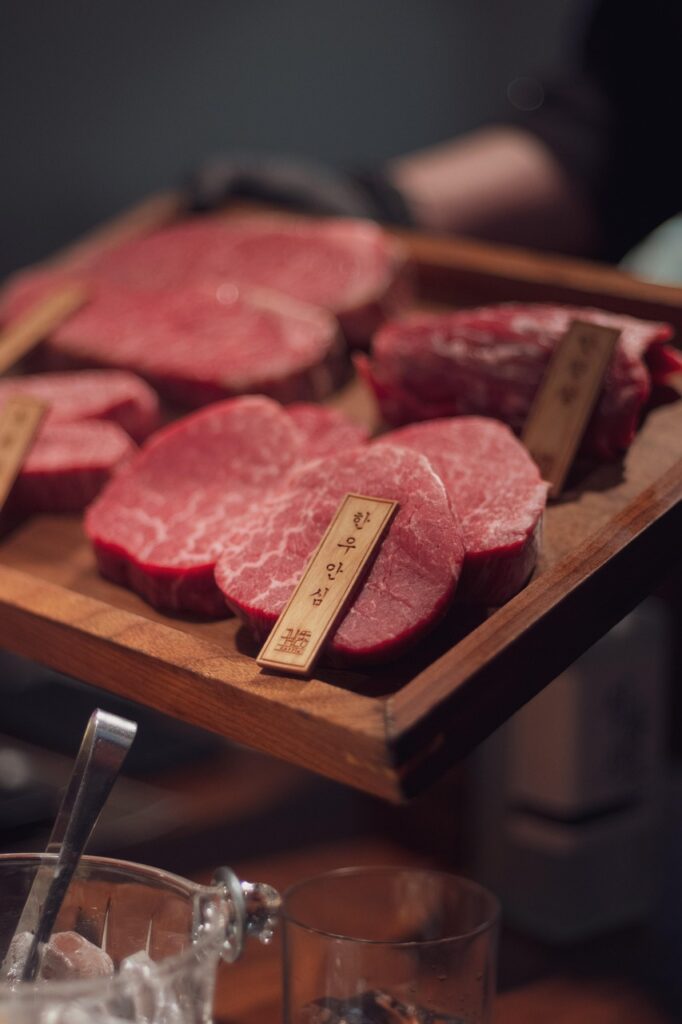 Red Meat and Diabetes[/caption]
The Lancet meta-analysis highlighted this: Processed meat's 15% risk per 50g dwarfs unprocessed's 10% per 100g. A 2023 AJCN cohort of 216,000 adults found processed red meat doubled T2D incidence versus unprocessed.
Unprocessed isn't innocent. Heme iron catalyzes free radicals, impairing beta-cell function. A 2022 PMC review tied it to 14% higher risk at 50g/day. Yet, grass-fed beef, richer in omega-3s, may mitigate this versus grain-fed.
Sodium in processed meats spikes blood pressure, compounding diabetes woes. Nitrates? Linked to endothelial dysfunction, per the 2019 AHA meta.
For red meat and diabetes management, prioritize unprocessed, lean cuts. Trim fat, pair with fiber. Evidence favors cutting processed foods first—ADA labels it "very limited" intake.
How Does Red Meat Potentially Trigger Diabetes? Unpacking the Mechanisms
Mechanistically, red meat and diabetes connect via several pathways. First, saturated fats (10-20% of red meat calories) induce lipotoxicity, where excess lipids disrupt insulin signaling in muscles and the liver.
Heme iron promotes ferritin overload, fostering inflammation via NF-kB pathways, impairing glucose uptake. Neu5Gc, a sugar in red meat absent in humans, triggers immune responses mimicking autoimmunity, per a 2021 Nature review.
Processed meats add nitrosamines, genotoxic compounds that damage pancreatic cells. High-heat cooking yields HCAs/PAHs, AGEs that glycate proteins, worsening resistance.
Gut microbiome shifts too: Red meat favors bile-tolerant bacteria, reducing SCFA producers that enhance insulin sensitivity. A 2023 Gut study linked high red meat to dysbiosis in diabetics.
Genetics modulate: APOE4 carriers face amplified red meat and diabetes risks. Caloric density contributes—red meat's 250kcal/100g crowds nutrient-dense plants.
Counterpoints: RCTs show neutral short-term effects, suggesting cumulative exposure matters. Antioxidants like vitamin E in meat may buffer, but veggies amplify protection.
Understanding these gears demystifies red meat and diabetes: It's not poison, but a cog in a larger machine.
Mitigating Risks: Smart Strategies for Red Meat Lovers with Diabetes Concerns
Worried about red meat and diabetes? Don't ditch it cold turkey—strategize. ADA guidelines: Cap red meat at 4oz thrice weekly, emphasizing lean, unprocessed.
Portion control: Use palm-size servings. Marinate to cut HCAs by 90%. Grill fish occasionally instead.
Balance plates: Harvard's Healthy Eating Plate mandates half veggies/fruits, quarter protein. Fiber blunts glucose spikes.
Monitor metrics: Track HbA1c quarterly. Apps like MyFitnessPal log red meat and diabetes impacts.
Exercise synergizes: 150 minutes weekly aerobic activity halves T2D risk, per Diabetes Prevention Program.
Supplements? Chromium or cinnamon may aid, but food-first. For red meat and diabetes, sustainability boosts adherence—try Meatless Mondays.
Consult pros: RDs tailor plans, ensuring nutrient needs are met.
Delicious Alternatives: Plant-Powered Swaps to Sidestep Red Meat Risks
Swapping red meat curbs red meat and diabetes worries without sacrificing flavor. Lentils mimic ground beef's texture in Bolognese (22g protein/cup). Chickpeas roast crisply, subbing chicken.
Tofu or tempeh absorbs marinades, grills like steak. Beyond Burgers offer heme-like bleed, but check the sodium.
Mushrooms' umami fools palates; portobellos "steak" up. Nuts/seeds boost satiety.
A 2023 AJCN modeling study: Replacing 50g red meat daily with nuts/legumes slashes T2D risk 20%.
Mediterranean diets, low-red-meat, prevent diabetes 52% better, per PREDIMED.
Experiment: Quinoa-stuffed peppers or eggplant "bacon." These swaps enhance gut health, stabilizing blood sugar.
Success Stories: Real Lives Transformed by Dialing Back Red Meat
Real-world wins illuminate red meat and diabetes science. Take Sarah, 52, prediabetic with A1c 6.2. A steak enthusiast, she averaged 200g of red meat daily. Post-diagnosis, she joined a lifestyle program, slashing to 100g/week, swapping for salmon and beans. Six months later, A1c dropped to 5.6; energy soared. "I miss the char, but feel unstoppable," she shares. Her story mirrors DPPro's 58% risk reduction via diet tweaks.
Then, Mike, 45, type 2 diabetic on metformin. BBQ ribs were his vice, contributing to 220mg/dL fasting glucose. Inspired by Harvard research, he went processed-free, grilling turkey burgers and veggie kebabs. Weight fell 15lbs; meds halved. "Blood sugar stabilized at 110—game-changer," per his journal. Studies back this: Reducing processed meat prevents 350,000 U.S. cases/decade.
Elena, 60, of Latino heritage, heightening her risk, cut red meat post-family history scare. Adopting Meatless Mondays with lentil tacos, her A1c fell from 7.1 to 6.4 in three months. "Family recipes adapted seamlessly—tastier, lighter," she says. PCRM reports plant shifts improve control by 30%.
These tales show that red meat and diabetes management are empowering. Community support, like Reddit's r/diabetes, amplifies success. One user: "Dropped red meat; reversed prediabetes in 90 days." Consistency trumps perfection.
Frequently Asked Questions (FAQs) About Red Meat and Diabetes
Q: Does red meat directly cause diabetes? A: No direct causation, but high intake correlates with a 10-15% higher risk per meta-analyses. Moderation key.
Q: How much red meat is safe if I have diabetes? A: Limit to 18oz (500g) cooked/week, per WHO/ADA. Focus unprocessed.
Q: Is grass-fed red meat better for diabetes? A: Potentially—more omega-3s reduce inflammation. But portion control still rules the red meat and diabetes equation.
Q: Can I eat red meat on a low-carb diabetes diet? A: Yes, lean cuts fit keto, but balance with greens to avoid saturated fat pitfalls.
Q: What if studies conflict on red meat and diabetes? A: Observational shows links; RCTs less so. Prioritize patterns over isolates.
Disclaimer
This article provides general information on red meat and diabetes based on scientific literature. It is not medical advice. Consult a healthcare professional before dietary changes, especially with diabetes. Individual responses vary; professional guidance ensures safety.
References
- Li C, et al. Meat consumption and incident type 2 diabetes: a federated meta-analysis. Lancet Diabetes Endocrinol. 2024;12(9):619-630.
- Schwingshackl L, et al. Red meat consumption and risk factors for type 2 diabetes. Eur J Clin Nutr. 2022;76:1210-1220.
- Zeraatkar D, et al. Red meat intake and risk of type 2 diabetes. Am J Clin Nutr. 2023;118(5):1009-1024.
- Shi W, et al. Red meat consumption, cardiovascular diseases, and diabetes. Eur Heart J. 2023;44(28):2626-2635.
- Tian X, et al. Red meat consumption and risk of type 2 diabetes. Am J Clin Nutr. 2023;117(6):1137-1146.
- Maki KC, et al. Meta-Analysis of RCTs of Red Meat. Circulation. 2019;139(15):1889-1900.
- Lescinsky-Paoli R, et al. Health effects of unprocessed red meat. Nat Med. 2022;28(11):2216-2224.
- Harvard T.H. Chan. Red meat consumption is associated with increased type 2 diabetes risk. 2023.
- Diabetes UK. Red and processed meat. 2025.
- CDC. Testimonials from the National Diabetes Prevention Program. 2024.




0 Comments